Is Drone Pressure Washing Safe for a Jacksonville Roof?
| Table of Contents |
|---|
| Drone Washing Safety |
| Roofing Material Match |
| Ladder-Free Advantage |
| Operator Control Process |
| Roof Type Coverage |
| Older Roof Care |
| Common Questions |
Key Takeaways
- Drone roof washing avoids foot traffic on the roof, which helps reduce a common source of shingle and tile damage.
- Water pressure and application methods are matched to the roofing material, so a metal roof and an asphalt shingle roof are not washed the same way.
- Our operators are FAA Part 107 certified and control every pass from the ground with live video.
- This lower-contact process is designed to avoid ladders leaned against gutters or fascia boards.
- Jacksonville's humid, coastal environment can contribute to recurring algae and mildew growth on some roofs, and regular washing can help slow how fast it returns.
- Older or storm-affected roofs can still be washed safely once we walk the property and assess the surface first.
Introduction
Bold City Drone Wash gets a version of the same question from almost every homeowner who calls us for the first time: is it actually safe to wash a roof with a drone. It is a fair question, especially if the only pressure washing you have seen involved a person standing on the roof with a hose. We are veteran-owned and family-operated, licensed and insured, and we built our process to help keep people off the roof during cleaning.
Here is how that process works, what helps keep it safe for different roof types, and what our operators are doing while the drone is in the air. If you want to talk through your specific roof before reading further, you can reach us at
904-299-1869 or
schedule an estimate.
What Makes Drone Washing Safer for a Jacksonville Roof?
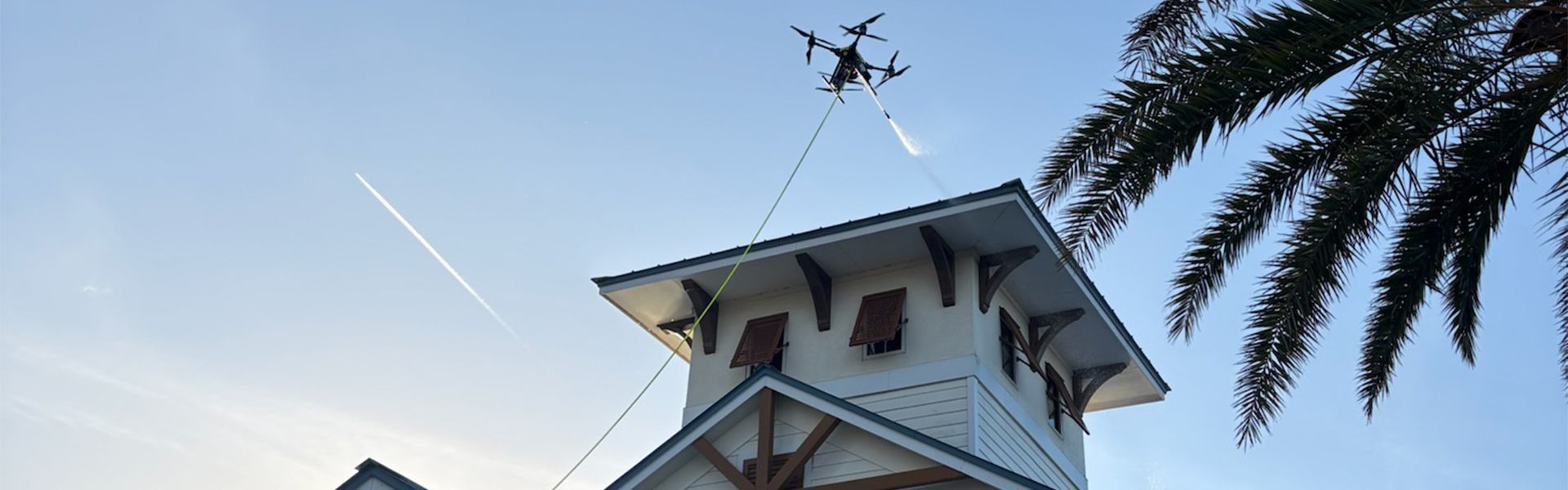
Drone roof washing offers a lower-contact cleaning option for many Jacksonville homes, when it's done by certified operators using pressure matched to the roofing material. The main safety concern with any roof cleaning is physical damage, either from someone walking on the shingles or from water pressure set too high for the surface. Drone washing helps avoid damage caused by people or equipment contacting the roof, since the drone never lands or touches the surface during the job.
Pressure that is too strong for the material is still a real risk, and managing it comes down to how the job is set up before the drone ever takes off. We walk every property before quoting, which lets us see the roof type, its age, and any soft spots before deciding how the wash should be run. That walk-through also covers nearby landscaping, gutters, and surrounding property that could be affected by overspray or runoff. That assessment is what carries into the next question, which is how we actually reduce the chance of pressure becoming a source of damage instead of a fix for it.
How Does Drone Washing Avoid Damage to Roofing Material?
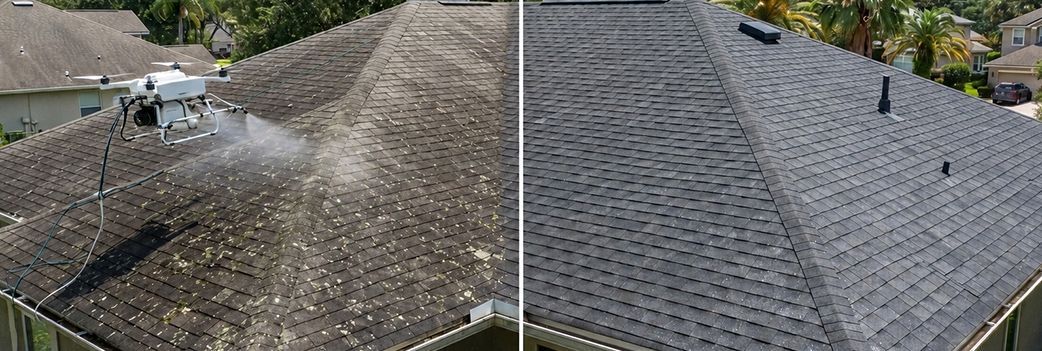
Every surface gets a wash method matched to what it is made of, not a single setting used on every job. Asphalt shingles, clay tile, and metal roofing can respond differently to water pressure, and a method that works well for one may not suit another. Depending on the property, our operators may use hot-water washing, soft wash, or pressure-wash options to fit what the roof needs.
Chemical-free options are also available on request, which matters for homes with landscaping close to the roofline or gutters that drain near a garden bed. Matching the method to the material only covers part of what helps keep a roof safe, since the way the wash is delivered from the air also plays a role in reducing risk to the surface, which is where the ladder-free part of the process comes in.
What Makes Ladder-Free Cleaning Safer Than Traditional Roof Washing in Jacksonville?
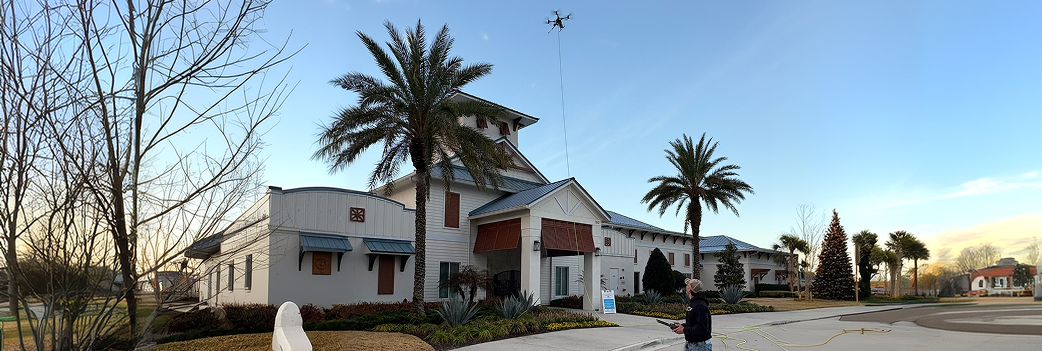
Working from the air, rather than from a ladder or lift, helps reduce a common source of accidental roof damage: foot traffic and equipment resting against the structure. A ladder leaned against a gutter can bend the gutter or crack fascia board, and a person walking a roof can crack tile or dislodge shingle granules even when they are being careful. This drone-based approach may eliminate the need for ladders, lifts, or scaffolding on suitable properties.
This also changes what a Jacksonville homeowner has to think about during the job itself. Nobody needs to move a ladder around landscaping, worry about a lift compacting the lawn, or clear a path for scaffolding near a fence line. With less physical setup involved, the part that determines how safe and even the result looks comes down to who is running the drone and how closely the pass is being watched.
How Do Certified Operators Control the Drone During a Roof Wash?
Our operators are FAA Part 107 certified. Every pass over the roof is controlled from the ground and monitored through live video, so the operator can see where the water is landing and adjust as needed rather than guessing at coverage. For a full walkthrough of the process, cost factors, and benefits, our drone washing overview covers what to expect from booking to the final pass.
That live monitoring is also what lets an operator pause or adjust mid-pass if something on the roof looks different than expected, a soft spot, a loose shingle, or a section that already shows wear. Knowing how the drone is controlled naturally raises a related question, which is whether every roof type can be washed the same way or if some materials need a different approach altogether.
What Roof Types Can Be Cleaned Safely with a Drone in Jacksonville?
Yes. Soft washing is generally safer for asphalt shingles because it doesn't rely on high pressure to force algae and buildup off the surface. Standard high-pressure washing can strip granules off asphalt shingles, force water under flashing, or loosen shingle edges, damage that isn't always visible right away.
For asphalt shingles, we do not use high pressure. Controlled pressure may be appropriate for certain non-shingle surfaces, such as concrete or some metal areas, but it's never our default method on a roof. If you're comparing the two methods for your specific roof, our soft wash vs pressure wash comparison breaks this down further.
Should You Clean Your Own Roof or Hire a Professional in Jacksonville?
Most residential roof types found across Jacksonville homes, including asphalt shingle, metal, and tile, can often be cleaned using a drone once the right method is chosen for that material. The home washing services we provide are built around matching pressure and application method to the surface rather than treating every roof the same way. Commercial roofing on office buildings and warehouses gets the same material-first approach through our commercial building washing service. Our full roof cleaning guide covers each roof material in more depth.
Condo and HOA roofing gets handled a little differently, since multi-unit properties often mean several roof sections and shared walkways to work around while keeping resident disruption low. Even with those differences, the same underlying question tends to come up on almost every call, which is whether an older roof or one with existing wear can still go through the process without added risk.
Is Drone Roof Washing Safe for Older or Fragile Roofs?
The approach changes based on what our operators find during the property walk-through. An older roof with brittle shingles or a roof that took storm damage needs lighter pressure, a different wash method, or in some cases a recommendation to hold off until repairs are made first. We would rather flag a concern before washing than risk making an existing problem worse.
This is also where being upfront matters most. If a roof looks like it needs a professional inspection before any washing happens, we say so, since a clean roof that is still structurally compromised has not actually solved the underlying problem. That kind of honest assessment is part of why homeowners across Jacksonville keep asking us the same handful of questions before booking, which is worth covering directly.
Frequently Asked Questions
Is drone roof washing safe for shingle roofs in Jacksonville?
Shingle roofs can generally be washed using pressure and an application method matched to the shingle type. Since the drone does not land on the roof, this approach helps reduce the foot traffic that can loosen granules or crack tabs during a manual cleaning.
Do the operators need a special license to fly wash drones over Jacksonville homes?
Yes, our operators are FAA Part 107 certified, which the FAA requires for commercial drone operations in Jacksonville and across the country.
Will drone washing void my roof warranty in Jacksonville?
Roof warranty requirements vary by manufacturer and product. We recommend reviewing your warranty documentation or contacting your manufacturer before scheduling any exterior cleaning, and we're happy to talk through our method if that helps with the comparison.
How close does the drone get to my roof during a wash in Jacksonville?
The drone stays close enough to apply water but does not touch the roof surface. Every pass is monitored through live video so the operator can adjust distance and pressure as needed.
How do I get a free estimate for roof washing in Jacksonville?
You can call us at 904-299-1869 for a free estimate, and we will walk your property before quoting so the plan matches your specific roof.
Bold City Drone Wash Offers a Safer Way to Clean Jacksonville Roofs
Roof washing does not have to mean ladders on your gutters or someone walking your shingles, and that is the difference a drone-based process can make. Bold City Drone Wash is licensed and insured, and every job starts with a walk-through so the method matches your roof instead of the other way around. If you want to talk through what your roof needs, call
904-299-1869 or
schedule a free estimate. You can also text us anytime at
904-789-7733 if that's easier.