How to Remove Black Streaks and Algae From a Jacksonville Roof
| Table of Contents |
|---|
| Algae Causes |
| Algae vs Dirt |
| Roof Damage Risks |
| Pressure Washing Risks |
| Drone Soft Washing |
| Prevention Tips |
| FAQs |
Key Takeaways
- Black streaks on Jacksonville roofs are commonly identified as a type of algae, not dirt, mold, or storm residue, according to general roofing industry findings.
- This algae is widely reported to feed on the limestone filler in asphalt shingles and spread by airborne spores, which is why entire neighborhoods often show it at the same time.
- High-pressure washing can strip granules off shingles, so the cleaning method matters as much as the cleaning itself.
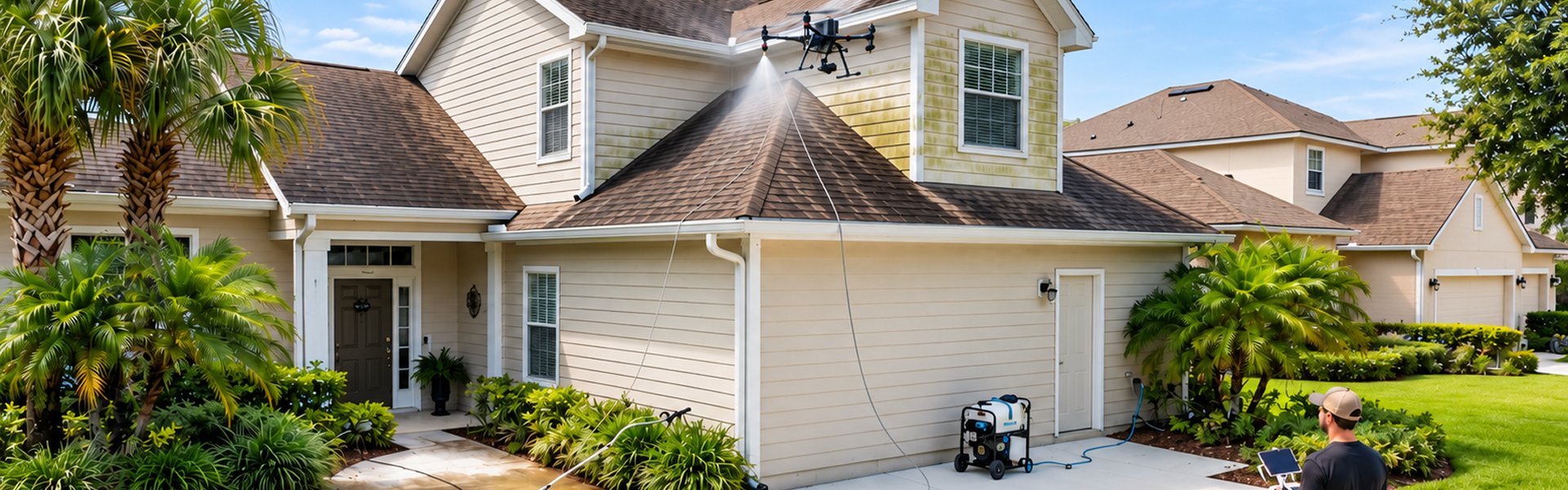
- Drone soft washing treats the roof from the air, so there is no foot traffic on shingles and no ladders against the house.
- Salt air, humidity, and shaded rooflines make regrowth common in Jacksonville, so ongoing maintenance matters more here than in drier climates.
- Roof warranty requirements vary by manufacturer, so it is worth checking your documentation before scheduling any cleaning.
Introduction
If you have noticed dark streaks running down your roofline, you are probably wondering whether something is wrong with your shingles or whether it is just dirt that a good rain will wash off. In most cases in Jacksonville, it is neither. Those streaks are a living organism, and understanding what it is changes how you should approach cleaning it.
Bold City Drone Wash is a veteran-owned, family-owned and operated company, licensed and insured, serving Jacksonville, Jacksonville Beach, St. Augustine, Fernandina Beach, and Palm Coast. You can see more on
our local service area if you want details specific to your neighborhood. If you want to talk through what is happening on your roof before deciding on a cleaning approach, you can
schedule a free estimate or call us at
904-299-1869.
What Causes Black Streaks on a Jacksonville Roof?
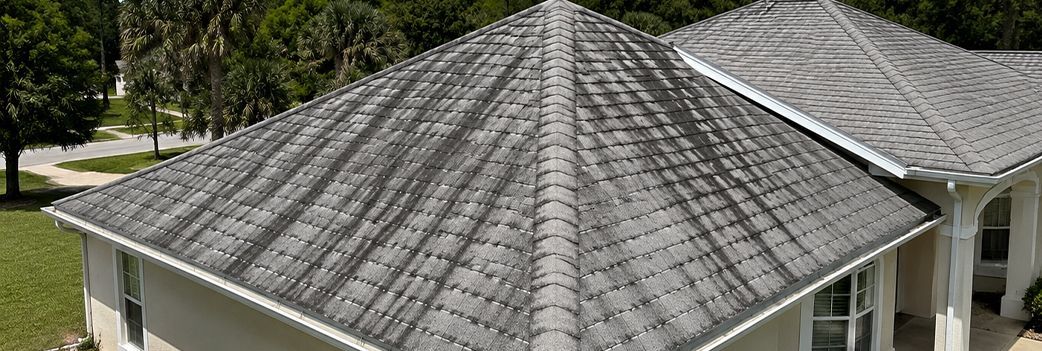
Black streaks on a Jacksonville roof are commonly caused by an airborne organism known in the roofing industry as blue-green algae. It is widely recognized as the most frequent cause of this kind of staining, and it spreads through spores that travel on wind and land on roofing materials, which is why it can show up on several homes in the same neighborhood around the same time.
Once a spore lands on a shingle, it feeds on the limestone filler that many asphalt shingles contain, and it produces a dark pigment as it grows to protect itself from UV exposure. That pigment is what you see as the streak. The combination of heat, humidity, and coastal moisture in Jacksonville creates conditions this algae favors year-round, which is different from northern climates where cold winters slow it down.
Streaks typically start on the north-facing or shaded side of a roof, where moisture sits longest, then spread downhill as rain carries spores toward lower shingles. Recognizing this pattern early makes it easier to decide when cleaning makes sense, which is the question most homeowners ask next.
Are Black Streaks Algae or Just Dirt?
Black streaks on a Jacksonville roof are algae, not dirt, mold, or ordinary weathering, even though the three can look similar from the ground. Dirt and pollen tend to sit evenly across a roof and wash away with normal rain, while algae streaks run in a directional pattern, usually vertical, and get darker and wider over time instead of fading. Mold typically needs a different set of conditions and tends to show up in isolated damp spots rather than in the long streaking pattern algae produces.
The distinction matters because it changes what actually removes the problem. Rinsing with plain water will not remove established algae, since the organism is anchored into the shingle surface and continues to grow back. A cleaning method built for organic growth, rather than for general dirt or dust, is what actually resolves it, which is why the removal method matters as much as the diagnosis, and why understanding the potential damage comes next.
Can Black Streaks Damage a Jacksonville Roof Over Time?
Black streaks can contribute to shingle wear over time on a Jacksonville roof, beyond just affecting how the home looks from the street. This algae is generally understood to feed on the limestone filler in asphalt shingles, which can loosen the protective granules that shield shingles from UV damage, and granule loss can shorten how long a roof holds up. The colony also holds moisture against the shingle surface longer than a clean roof would, which can add to wear in Florida's already humid climate.
This does not mean every streaked roof is at risk of failing, and the extent of any impact depends on how long the growth has been present and how much coverage it has. What it does mean is that streaks are worth addressing before they spread further across the roofline. Understanding how a roof gets damaged also raises a fair question about the cleaning process itself, since not every washing method is safe for shingles.
Why Does Pressure Washing Put Jacksonville Shingles at Risk?
Standard high-pressure washing can strip granules off Jacksonville shingles, which is the opposite of what a roof cleaning should accomplish. Asphalt shingles are surfaced with a layer of granules that protect against UV rays and help shed water, and those granules are not designed to withstand direct high-pressure spray. Once granules are stripped away, the shingle underneath is exposed, which can accelerate wear and, depending on the manufacturer, may affect warranty coverage.
Roof warranty requirements vary by manufacturer and product. We recommend reviewing your warranty documentation or contacting your manufacturer before scheduling any exterior cleaning. This is part of why the cleaning method for a roof needs to be different from the method used on a driveway or a fence, which brings up how a safer approach actually works.
How Does Drone Soft Washing Remove Roof Algae in Jacksonville?
Drone soft washing removes roof algae in Jacksonville by applying a controlled, low-pressure treatment from the air instead of scrubbing or blasting the shingle surface. Our operators evaluate each property's roof material, slope, and condition before selecting the pressure, temperature, and cleaning approach for that specific job, since a metal roof, a tile roof, and asphalt shingles do not respond the same way to the same method. Hot water washing and soft wash are used depending on what the roof needs, and chemical-free solutions are available on request.
Because the drone operates from the air, there is no one walking on the shingles and no ladder resting against the fascia, which removes a common source of both roof damage and fall risk during a cleaning job. Every pass is monitored by live video so our operators can see exactly what the drone is treating in real time. Our operators are FAA-certified under Part 107 regulations, and we follow FAA rules for commercial drone flight and use on every job. If you want a closer look at
how drone pressure washing works beyond roofs specifically, that breakdown covers the full process.

How Can Jacksonville Homeowners Prevent Algae From Coming Back?
Homeowners in Jacksonville can reduce how quickly algae returns after a cleaning, though no roof in this climate is permanently immune to regrowth given the humidity and coastal air. Trimming overhanging tree limbs so more sunlight reaches the roof can help, since this type of algae favors shaded, damp conditions. Keeping gutters clear so water drains properly instead of sitting against the roofline also reduces the moisture it depends on.
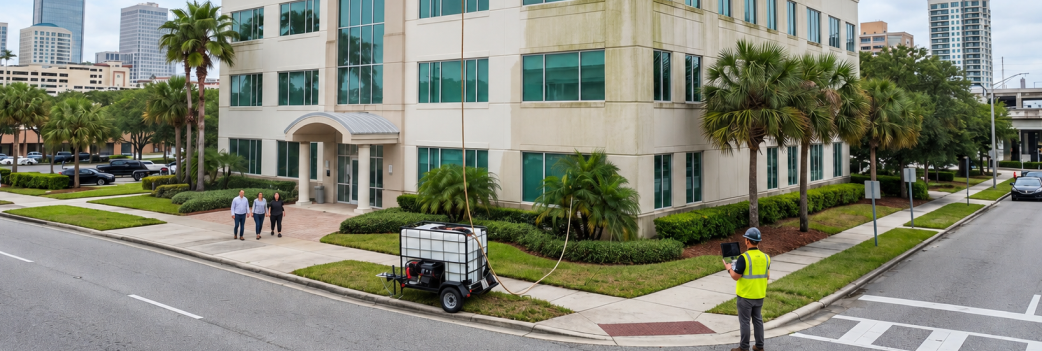
Routine cleaning on a regular schedule, rather than waiting until streaks are heavily established, tends to keep the problem more manageable and less visible from the street. Algae is not limited to single-family homes either, HOA boards managing condos and townhomes across Northeast Florida face the same buildup on shared rooflines, which is why we also offer
community-wide algae cleaning for managed properties. For a broader look at maintaining a Jacksonville roof beyond just algae,our
complete roof cleaning guide covers additional upkeep steps.
Frequently Asked Questions
What is causing the black streaks on my roof in Jacksonville?
Those streaks come from a common airborne organism, often called blue-green algae, that settles on rooftops after being carried by wind currents. As it colonizes a shingle, it darkens in color, which is the actual staining homeowners see, not an accumulation of dirt or storm debris. This is common enough in Jacksonville that entire streets can show the same pattern within the same season.
Is the algae on my roof harmful to people living in the home, and does this apply across St. Augustine and Fernandina Beach too?
Roof algae is generally considered a cosmetic and structural concern rather than a direct health hazard to people living in the home. It can affect shingle condition over time, but it is different from mold growth inside a living space, which carries different health considerations. This holds true whether the property is in Jacksonville, St. Augustine, Fernandina Beach, or elsewhere along the coast.
Will pressure washing damage my Jacksonville roof?
Traditional high-pressure equipment is not matched to how asphalt shingles are built, and using it can leave the surface more exposed than before the cleaning. A lower-pressure, surface-matched approach is the method generally recommended for shingle roofs in Jacksonville instead.
How often should Jacksonville homeowners have their roof cleaned?
There is no single schedule that fits every roof, since regrowth speed depends on shade, tree coverage, and how close a home is to the coast. Homes closer to the water in places like Fernandina Beach or Jax Beach tend to need attention sooner than more inland Jacksonville properties with less salt exposure.
Should I check anything before scheduling a cleaning for my Jacksonville or St. Augustine home?
Roof warranty requirements vary by manufacturer and product. We recommend reviewing your warranty documentation or contacting your manufacturer before scheduling any exterior cleaning, whether your home is in Jacksonville, St. Augustine, or a nearby city.
Ready to Talk About Your Jacksonville Roof
Black streaks on a Jacksonville roof are a solvable problem once you know what you are dealing with and which cleaning method actually fits asphalt shingles. Bold City Drone Wash offers drone-based soft washing for homes across Jacksonville, Jacksonville Beach, St. Augustine, Fernandina Beach, and Palm Coast, with FAA-certified operators and equipment matched to your roof's material and condition. You can call us at
904-299-1869, text us 24/7 at
904-789-7733, or
schedule a free estimate to talk through what your roof needs.