How Often You Should Wash Your House in Florida: A Jacksonville Homeowner's Guide
| Table of Contents |
|---|
| Florida's Dirty Secret |
| Recommended Wash Schedule |
| Surfaces That Suffer Most |
| Overdue Warning Signs |
| What Drives Frequency |
| The Drone Difference |
| Common Questions |
Key Takeaways
- Most Jacksonville homes need exterior washing two to three times a year because algae, mold, and salt buildup grow year-round in Florida's heat and humidity, never going dormant the way they do further north.
- A single annual wash is not enough for most Florida homes, and those that skip a full year of cleaning usually need more effort and sometimes a follow-up visit to get surfaces back to a clean baseline.
- Coastal homes near Jacksonville Beach, St. Augustine, and Fernandina Beach typically need three washes per year because salt air accelerates surface buildup across roofs, siding, gutters, and trim faster than inland conditions allow.
- Roofs, gutters, siding, driveways, walkways, windows, and fencing each accumulate different types of buildup and may need different cleaning methods and different timelines.
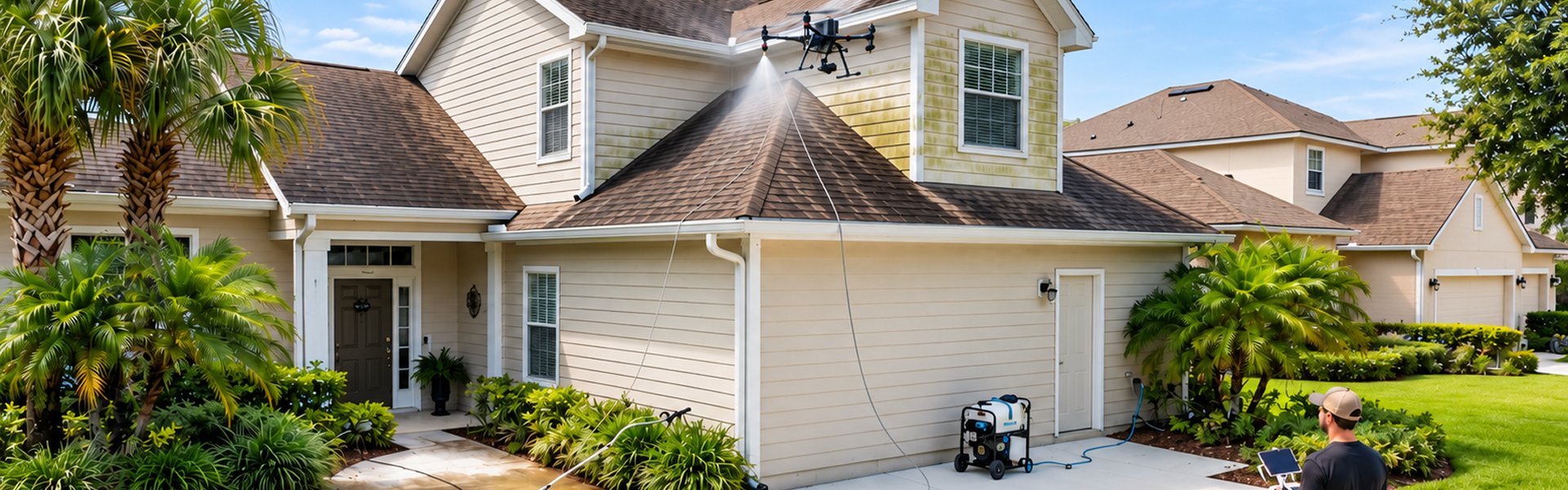
- Drone-based washing reaches rooftops, upper siding, and elevated gutters without ladders, lifts, or scaffolding, with chemical-free options available on request.
- Bold City Drone Wash is a licensed and insured, veteran-owned, family-owned and operated company with FAA Part 107-certified operators serving Jacksonville and the surrounding Northeast Florida coast.
Introduction
Algae grows on Jacksonville roofs within months of a wash. Mold spreads across siding walls before most homeowners notice it. Salt air from the coast leaves a corrosive film on windows, gutters, and trim that rain does not rinse away. These are not occasional problems. They are what happens continuously to every home in Northeast Florida because the heat and humidity here never give exterior surfaces a break between seasons.
Most cleaning schedules are built around how often homes in cooler states need washing, not how often homes in Jacksonville actually do. Algae, mold, salt air, and storm debris operate on a continuous cycle here, and a once-a-year wash leaves too long a gap for that cycle to be interrupted. The buildup that looks like a recent problem from the street has usually been setting in for months.
This covers the right washing schedule for Jacksonville homes, which surfaces need the most attention, how to spot the warning signs that a wash is already overdue, and how drone-based exterior cleaning reaches the surfaces that make keeping a consistent schedule difficult. For a full overview of what our service covers, visit our residential drone service. To understand how the technology works and what a job typically costs, our guide to
how drone pressure washing works and what it costs has the detail.
Why Do Florida Homes Get Dirty So Much Faster Than Homes in Other States?
Most exterior cleaning schedules are built for climates that get a winter break. Temperatures drop, humidity falls, and algae and mold growth slows or stops entirely for several months of the year. That break gives surfaces time to stabilize between cleanings and is why an annual wash works well in most of the country.
Jacksonville does not get that break. Heat and humidity persist through every month of the year, which means the organic growth that would go dormant in colder climates keeps spreading here without pausing. Algae, mold, and mildew have no off-season in Northeast Florida, and a cleaning schedule that does not account for that ends up running behind from the start.
Algae is the most visible result on roofs. The dark streaking that runs down shingle slopes from the ridge is typically a bacteria called Gloeocapsa magma, which feeds on limestone filler found in asphalt shingles and spreads faster the longer humidity stays elevated. On siding and soffits, particularly on walls that face north or sit under tree canopy, mold and mildew establish in the surface texture and spread from isolated patches to continuous coverage between cleanings.
Salt air adds a separate layer of damage for coastal homes. Homes near the water in Jacksonville Beach, Fernandina Beach, and St. Augustine sit close enough to the ocean that salt residue settles on windows, metal trim, roof edges, and painted surfaces. That residue is corrosive when left in place, and it traps moisture against the surface in a way that accelerates the organic growth building on top of it.
Storm season compounds everything. Organic debris left on roofs and driveways after a storm breaks down into material that feeds what is already growing on the surface. Each source of buildup feeds the next, which is why homes that fall behind on cleaning tend to deteriorate faster than the gap in time would suggest. The next section covers what a cleaning schedule that actually keeps pace with these conditions looks like for most Jacksonville homes.
How Often Should Jacksonville Homeowners Actually Schedule Exterior Washing?
The most common assumption is that once a year is enough. For most Jacksonville homes, that gap is too long, and the damage it allows is usually invisible until it is already established deep in the surface.
Two to three washes per year is the range that keeps pace with Florida conditions for most homes. That frequency interrupts the growth cycle before buildup gets established, keeps salt film from bonding permanently to glass and metal, and means each cleaning session takes less time than the previous one because nothing has had the chance to dig into the surface. Homes that stay on that schedule are consistently easier and faster to clean than homes that fall behind.
Coastal homes near Jacksonville Beach, Fernandina Beach, and St. Augustine benefit from three washes per year rather than two. Salt air deposits on every exposed surface faster than inland conditions allow, and the corrosive effect of salt left in place compounds over time in a way that organic growth alone does not.
Inland Jacksonville homes and those in Palm Coast generally manage well with two washes per year. Spring is the most practical first window because pollen season has peaked, any mold that settled in over cooler months is visible, and storm season has not yet started. Fall is the second window, after summer storm debris has accumulated on roofs and driveways and before cooler months change the growth pattern.
Driveways and walkways often benefit from their own separate schedule. These surfaces develop algae and mold that become slip hazards when wet, and many homeowners in Jacksonville wash those surfaces three to four times per year depending on how much shade and foot traffic they see. Gutters benefit from a dedicated wash after heavy rains and storm events, in addition to whatever full exterior cleaning schedule the home is on.
Several factors can push the recommended frequency higher than these baselines, and those are covered ahead. First, it helps to know which surfaces collect the worst buildup and why, because not every surface on a Jacksonville home deteriorates at the same rate.
Which Surfaces on a Jacksonville Home Need the Most Attention?
Not every surface on a home collects buildup at the same rate or responds to the same cleaning method, and treating them all the same is one of the reasons homeowners end up with surfaces that look clean while others quietly deteriorate. Here is where to focus first and why.
Roofs are where the most damaging buildup occurs for the longest period without being noticed. Algae streaking across shingles is often visible from the street only after it has covered a large portion of the slope. That growth holds moisture against the shingle surface and accelerates surface wear over time in a way that early cleaning reverses if caught before it sets in. Cleaning a roof requires matching pressure and temperature to the specific shingle material, because settings that work on metal or concrete cause damage on asphalt. Our operators evaluate each roof before selecting the method for the job. Roof warranty requirements vary by manufacturer and product, so we recommend reviewing your warranty documentation or contacting your manufacturer before scheduling any roof cleaning.
Gutters fill with storm debris, organic matter, and standing moisture that creates a mold environment inside the channel and along the fascia board below. Tiger striping on the outside face of the gutter, the black streaking that runs down from the lip, is one of the clearest signs that gutters have gone too long without cleaning. For a full breakdown of what roof and gutter cleaning involves, our complete guide to roof cleaning in Jacksonville covers the process in detail.
Siding and soffits on shaded walls are where mold and mildew grow fastest between sessions. North-facing walls and areas under overhanging tree canopy stay wet the longest after rain, and mold that starts in one shaded panel spreads outward if it is not caught. Soft wash methods work well here because they remove growth without forcing water behind panels or into gaps between boards.
Driveways and walkways develop algae and mildew that appear as dark staining on concrete and pavers. A surface that looks fine in dry conditions becomes dangerously slick when wet with algae present, and pressure washing is the most direct way to restore traction and remove the growth.
Windows and trim are often last on a homeowner's cleaning list but should not be. Salt film bonds to glass and exterior metal frames over time, and the longer it sits, the more effort it takes to remove. Pollen and mold also collect on sills and window trim, particularly on the exterior face that rain does not fully rinse.
Fencing is the most commonly skipped surface and one of the fastest to show growth. Wood and vinyl fencing in low-airflow or shaded areas collect algae and mold quickly, and growth on fencing can transfer to adjacent siding or paving over time if left in place. Knowing which surfaces are already past their cleaning window is the next thing to understand, and the signs are usually clear once you know what to look for.
What Are the Warning Signs That Your Jacksonville Home Is Overdue for a Wash?
Most homeowners wait until something looks visibly wrong before scheduling a wash. The problem with that approach in Florida is that by the time buildup is obvious from the ground, it has usually been establishing itself in the surface for months. These are the signs that a home has already passed its cleaning window, and what each one actually means.
Dark streaks running down the roof slope are the most visible indicator of algae growth. The streaking typically starts near the ridge and runs downward along shingle lines, and it may cover large portions of a slope before anyone notices it from street level. This is not just a cosmetic issue. The bacteria holding that color against the shingles also holds moisture, and moisture left against asphalt shingles accelerates surface deterioration over time.
Green or black discoloration spreading across a wall section, particularly on a shaded north-facing wall, points to mold or mildew that has moved past its early stage. Isolated spots mean the growth is recent. Continuous coverage across a wall section means it has been established long enough to work into the surface texture, and the cleaning session that follows will take more effort than it would have earlier.
A chalky or hazy film on windows and exterior metal trim is how salt deposit buildup shows up on coastal homes. Unlike organic growth, salt film does not rinse off with rain. It bonds to glass and metal over time and becomes progressively harder to remove the longer it sits. Homes near the water in Jacksonville Beach, St. Augustine, and Fernandina Beach see this develop faster than homes further inland.
Slippery driveways and walkways after rain are a practical safety problem, not just a cleaning one. Algae and mold on concrete and paver surfaces create a slick film when wet, and if a driveway or walkway is noticeably slick after rain, the surface has enough organic growth to be a fall hazard and needs pressure washing.
Tiger striping on gutter faces, the black vertical streaks running down from the gutter lip, appears when organic debris overflows during rain and leaves residue on the exterior surface of the gutter. It does not self-correct and is a reliable sign that gutter cleaning is overdue. Seeing more than one of these signs on the same home usually means the cleaning window has been missed long enough that the first session will take more time than a maintenance wash would have, and in some cases will need a follow-up visit. The factors that make some homes reach that point faster than others are what the next section covers.
What Specific Factors Push a Jacksonville Home's Cleaning Frequency Higher?
Two homes a mile apart in Jacksonville can need very different cleaning schedules. The baselines covered earlier apply to typical homes, but several specific conditions push the frequency higher, and ignoring them is what leads to the visible deterioration that makes cleaning more difficult and costly over time.
Distance from the coast is the single largest factor. Salt air from the ocean settles on every exposed surface within a wide radius of the water, not just on beachfront homes. The closer a home sits to the ocean in Jacksonville Beach, Fernandina Beach, or St. Augustine, the faster salt residue accumulates on roofs, siding, gutters, trim, and windows. A coastal home that goes four months without cleaning may show as much deterioration as an inland home that went eight months without one.
Tree canopy and shade coverage keeps exterior surfaces wet far longer after rain than open sun-exposed surfaces. A wall or roofline that stays wet for hours after a storm gives algae and mold more time to establish than a surface that dries within an hour. Homes with heavy tree coverage, particularly on north-facing walls and rooflines, may need cleaning every three to four months for those specific surfaces rather than seasonally.
Exterior materials affect both how quickly buildup appears and what cleaning method is appropriate. Stucco holds moisture in its texture and shows mold faster than smooth painted siding. Metal surfaces corrode faster when salt deposits are left in place. Brick and concrete driveways in shaded areas develop algae faster than those in full sun. Our operators match pressure, temperature, and cleaning method to each surface individually on every job, which is why we evaluate each home before the work begins.
The time elapsed since the last cleaning matters more than many homeowners expect. A home that has gone two or more years without an exterior wash has given organic growth enough time to establish in surface pores and material texture, not just on the surface layer. The first wash after a long gap takes more time, may need a follow-up session, and requires more careful surface management than a home cleaned consistently two to three times per year. Staying on schedule means each session is faster and more straightforward than the last. Our
local service area covers how conditions differ across Jacksonville, Jacksonville Beach, St. Augustine, Fernandina Beach, and Palm Coast, and how we adjust our approach by location. The next section covers how drone-based washing handles the specific surfaces that make keeping this schedule difficult for most homeowners.
How Does Drone Washing Solve the Problems That Make a Consistent Schedule Hard to Keep?
The surfaces that collect the worst buildup on a Florida home are almost always the ones that are hardest to clean. Roofs, elevated gutters, upper-story siding, and second-floor soffits are where algae and mold establish first because they stay wet the longest after rain. They are also the surfaces that require ladders or roof access to clean, which is a real barrier for homeowners trying to maintain a consistent schedule, and a liability issue for contractors who need to send someone onto the roof.
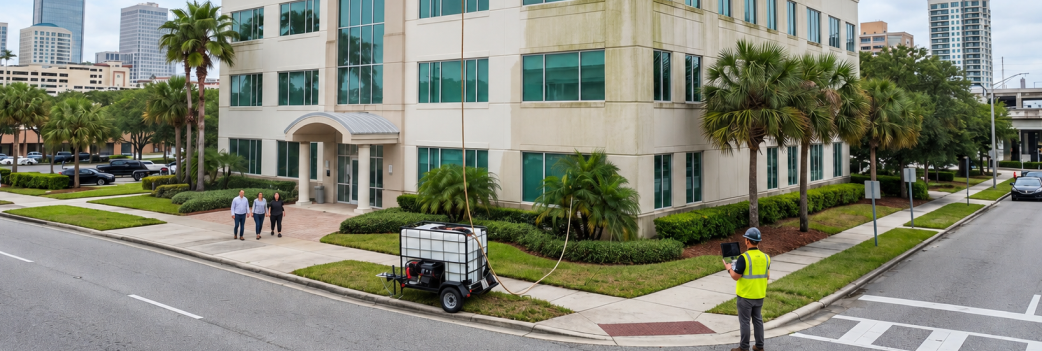
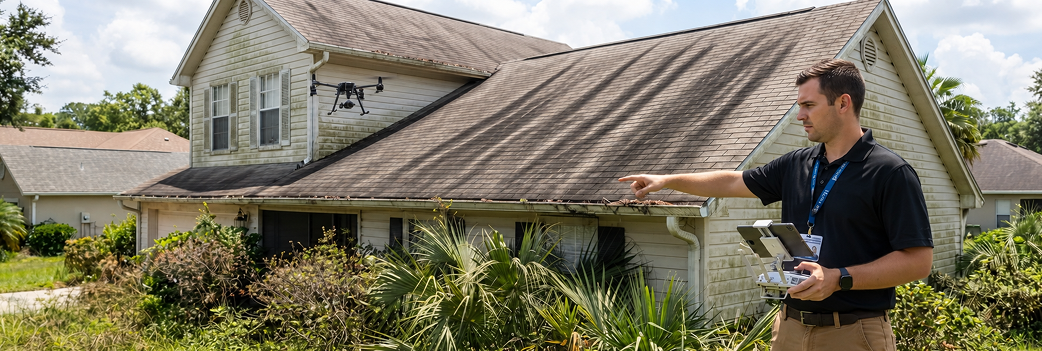
We use FAA Part 107-certified drone operators to wash roofs, gutters, upper siding, soffits, windows, driveways, walkways, and fencing without anyone going onto a ladder or the roof surface. The drone delivers controlled pressure directly to the area being cleaned, and our operators monitor every pass in real time. The drone never physically contacts the roof or any elevated surface during the job.
We match pressure and temperature to each surface on every job. Soft wash settings handle siding, trim, and finishes that need lower pressure to avoid damage. Hot water and higher pressure handle driveways, concrete, and surfaces with heavy organic buildup that standard pressure alone would not remove. Chemical-free options are available on request.
Because no ladders or lifts are involved, landscaping, flower beds, and outdoor furnishings stay undisturbed throughout the job. Jobs for a typical Jacksonville home run one to three hours depending on the number of surfaces being cleaned and the size of the home, which makes it straightforward to fit into a two to three times per year maintenance schedule without a major disruption to the day.
We are a veteran-owned, family-owned and operated company, licensed and insured, with FAA Part 107-certified operators covering all five service areas. Free estimates are available before every job. To see how drone-based cleaning compares to traditional pressure washing on cost, coverage, and safety, our
drone vs. traditional pressure washing guide covers the comparison in full.
Frequently Asked Questions
How often should you wash a house in Jacksonville, Florida?
Most Jacksonville homes need exterior washing two to three times a year. Coastal homes near Jacksonville Beach, St. Augustine, and Fernandina Beach typically need three washes because salt air accelerates buildup faster than inland conditions allow. Inland homes and those in Palm Coast generally manage well with two washes, timed in spring and fall. Homes with heavy shade coverage or a long gap since the last cleaning may need more frequent attention to start.
What is the best time of year to schedule exterior washing in Jacksonville?
Spring clears pollen buildup, mold from cooler months, and debris from the previous storm season. Fall removes organic matter that accumulated over summer before cooler temperatures shift the growth pattern. These two windows cover most Jacksonville homes on a two-wash schedule. Coastal homes add a mid-year wash to stay ahead of salt air accumulation during peak summer heat.
Can a roof in Jacksonville be cleaned without anyone walking on it?
Yes. Our FAA Part 107-certified operators deliver controlled pressure directly to the roof surface from above without anyone stepping onto the shingles. The drone never physically contacts the roof, which removes the fall risk that comes with ladder-based cleaning. Roof warranty requirements vary by manufacturer, so we recommend reviewing your documentation before scheduling any roof cleaning.
Does drone washing in Jacksonville use chemicals on my roof and siding?
We offer chemical-free cleaning options on request. We also offer soft wash and hot water methods matched to the specific surface, whether that is asphalt shingles, stucco, siding, brick, concrete, or vinyl fencing. When you schedule a free estimate, we evaluate each surface before selecting the right cleaning approach for the job.
Does Bold City Drone Wash serve areas outside Jacksonville?
We serve Jacksonville, Jacksonville Beach, St. Augustine, Fernandina Beach, and Palm Coast as our primary service area. Travel is available for large or specialty projects anywhere in Florida. To confirm coverage for your home, call us at 904-621-2080 or text us 24/7 at 904-789-7733.
Is There a Better Way to Stay Ahead of What Florida's Climate Does to Your Home?
Exterior washing works best as maintenance, not a repair. By the time roof streaks are visible from the street or the driveway is slippery after rain, the buildup has already had months to work into the surface. Two to three washes per year interrupts that cycle before it becomes a problem, keeps each cleaning session straightforward, and protects surfaces from the kind of deterioration that costs more to reverse than it would have to prevent.
We are a veteran-owned, family-owned and operated company, licensed and insured, serving Jacksonville, Jacksonville Beach, St. Augustine, Fernandina Beach, and Palm Coast. Our FAA Part 107-certified operators clean roofs, gutters, siding, driveways, walkways, windows, and fencing without ladders, lifts, or scaffolding. Chemical-free options are available on request, and we match pressure and wash method to each surface on every job. Free estimates are available for every residential home across all five service areas.
Call us at
904-621-2080 or text us 24/7 at
904-789-7733. To
schedule an estimate at no charge, reach out anytime.