Drone vs Traditional Pressure Washing: What's the Difference in Jacksonville?
| Table of Contents |
|---|
| Method Comparison |
| Roof Access Risk |
| Cleaning Speed |
| Surface Damage Risk |
| Cost Comparison |
| Choosing a Method |
| Salt Air Impact |
| FAQs |
Key Takeaways
- Drone washing cleans rooftops and siding without ladders, scaffolding, or foot traffic touching the property.
- Traditional pressure washing depends on manual roof access, which changes the risk picture for the property and the crew.
- Both methods can match pressure, temperature, and cleaning solution to the surface being cleaned.
- Live video monitoring during each drone pass helps operators track coverage as the job happens.
- Salt air, humidity, and organic growth are common conditions that shape which method fits a Jacksonville property.
- Bold City Drone Wash offers hot water washing, soft wash, and pressure wash options matched to each home.
Introduction
Choosing between drone washing and a traditional pressure washing crew isn't really about which one cleans better. Both can leave a roof, driveway, or set of siding looking like new. The real differences sit underneath that, in how the work gets done, what it takes to get there, and what that means for your property along the way.
Bold City Drone Wash is a licensed and insured, veteran-owned, family-operated company, and we handle residential and commercial jobs across Jacksonville every week. Our
residential drone service is one option worth understanding before you decide, and our operators are glad to talk through how it stacks up against a traditional wash for your specific home, whether that's by phone or by
scheduling an estimate. Here's what actually separates the two methods, section by section.
How Do Drone and Traditional Pressure Washing Work in Jacksonville?
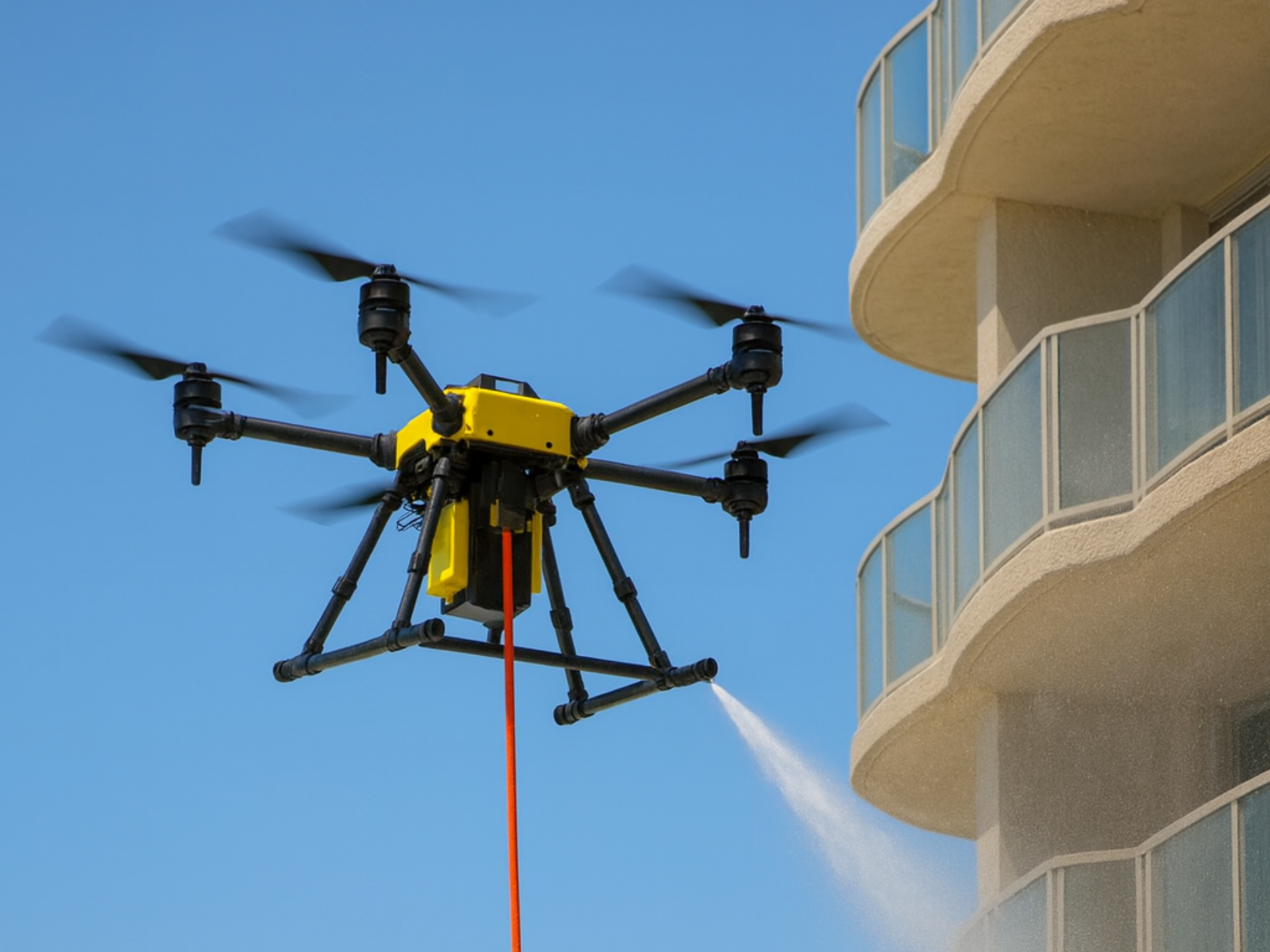
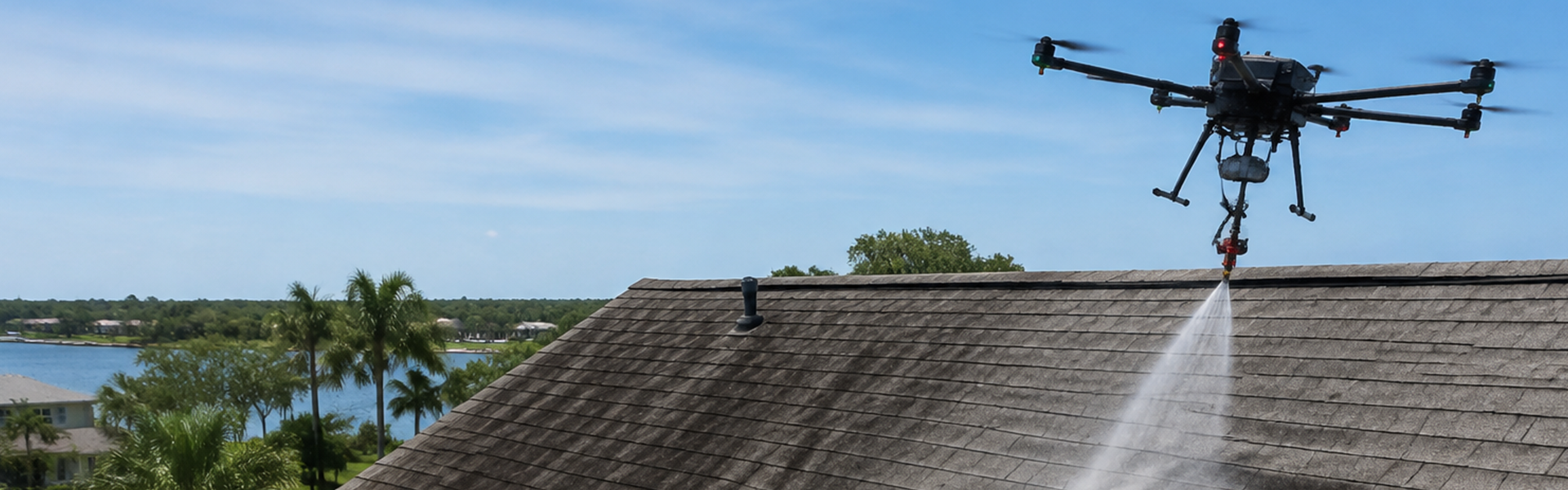
Most homeowners assume pressure washing is one process no matter who shows up to do it, which makes it hard to know what's actually different about a drone-based job. The core difference is contact. Traditional pressure washing usually means a technician on a ladder, a lift, or the roof itself, holding a wand connected to a pressure washer. Drone pressure washing removes that step. Our operators fly the drone from the ground using a remote system, and the drone sprays water or cleaning solution from above without landing on the structure.
Both approaches can use the same basic tools, hot water, soft wash, and standard pressure wash settings, adjusted to the surface being cleaned. The real question for most homeowners isn't which tool is being used. It's what happens to the roof and the crew while that tool is in use, and that's where ladder access starts to matter.
Is Drone Washing Safer Than Ladder Access for Jacksonville Roofs?
Climbing onto a roof to clean it introduces risk that has nothing to do with the cleaning itself. Traditional pressure washing often requires someone to climb a ladder, set up scaffolding, or walk directly on the roof to reach every section, and that kind of access can put strain on shingles, gutters, and landscaping while introducing a fall risk that doesn't exist when nobody is standing on the property.
Drone washing helps reduce that specific risk because the drone never lands or makes contact with the roof. There's still no such thing as a risk-free exterior cleaning job. Water pressure, roof condition, and weather all still play a role no matter which method is used. What changes is that one less variable, a person walking the roof, gets removed from the job. Once that variable is gone, the next thing that tends to change is how long the whole job takes.
Which Method Cleans a Jacksonville Property Faster?
Ladder and scaffolding setup between sections of a home adds time to a job that has nothing to do with the actual cleaning. Traditional methods can take longer on multi-story homes or properties with a steep roof pitch, since crew setup and repositioning add time between sections.
Drone washing generally covers a home faster because the equipment can move across large surfaces without repositioning ladders or scaffolding between sections. Most residential jobs with Bold City Drone Wash run between one and three hours depending on the size of the home and which surfaces are included. A faster job only matters if the surface comes out clean and undamaged, so speed on its own isn't the full picture. Damage risk is the part most homeowners actually want answered.
Does One Method Reduce the Risk of Surface Damage?
Any method that puts repeated foot traffic on a roof carries some chance of loosening granules or stressing aging shingles, separate from whatever pressure setting is used. Shingles, stucco, paint, and wood all respond differently to water pressure, and that holds true whether the water is coming from a wand on the ground or a drone in the air. Both methods can protect a surface when the operator adjusts pressure and distance correctly for the material.
Where drone washing offers an advantage is by removing foot traffic from the equation entirely. Our operators adjust pressure and temperature by surface type on every job, so the method fits the material rather than the other way around. Damage risk on any exterior cleaning job comes down to operator judgment as much as the tool being used, which brings up the question most people ask right after: what does that actually cost?
How Do Cost Factors Compare Between the Two Methods?
It's hard to compare pricing between the two methods without knowing which variables actually drive the number up or down. Pricing depends on enough of them, property size, roof height, surface type, access difficulty, that a general comparison won't hold up for every home. What's fair to say is that both methods price around similar factors: square footage, the number of surfaces being cleaned, and how much prep or access work the job requires.
Drone washing can sometimes reduce setup costs tied to scaffolding or lift rentals for taller or harder to reach properties, since the drone handles that access differently. For an accurate number on your own property, a free estimate is the most reliable way to see how those factors apply to your home specifically. For a fuller breakdown of pricing and what drives it, our upcoming guide on
drone washing cost and benefits covers this in more depth.
Which Method Fits Your Jacksonville Property Best?
Without knowing your property's height, roof pitch, or access points, it's hard to say which method actually makes sense for your home instead of getting a generic recommendation. Taller homes, steep roof lines, or properties with limited ground access tend to benefit most from drone washing, since it reaches those areas without the physical access a traditional crew would need. Single story homes with straightforward access can often be handled well by either method.
We walk every property before quoting so the recommendation matches your home instead of a generic answer. That same local knowledge matters even more once you factor in what Jacksonville's climate does to a roof or a set of siding panels over time.
How Do Salt Air and Humidity Affect Cleaning Choices in Jacksonville?
Salt air, humidity, and organic growth like algae and mold are common conditions on Jacksonville homes, and they can contribute to buildup on rooftops and siding faster than in drier inland climates. That buildup doesn't necessarily change which method you should use, but it does affect how often a property needs attention. Homes closer to the coast often see algae and salt residue return sooner than homes farther inland.
That's part of why some property owners schedule cleanings once or twice a year rather than treating it as a one-time job. If you want a deeper look at roof cleaning schedules and upkeep in Jacksonville, our upcoming
complete guide to roof cleaning covers that in more detail. If you'd like to see how we cover
our local service area, you'll find more detail there. For your own property, a free estimate is still the most direct way to get a clear answer.

Frequently Asked Questions
Is drone pressure washing better than traditional pressure washing for a Jacksonville home?
It comes down to what your property needs. Homes with height, a steep roof, or tight access around the exterior tend to see the biggest advantage from drone washing. A single story Jacksonville home with easy access on all sides can often be served well by either method.
Do drone operators need special certification to work in Jacksonville?
Yes. Our operators are FAA-certified under Part 107 regulations, and we follow FAA rules for commercial drone flight and use on every job. This certification is separate from a general contractor license.
Will drone washing damage my roof or siding in Jacksonville?
Drone washing helps reduce a common source of surface stress by keeping foot traffic off the roof entirely. Our certified operators still adjust pressure and temperature by material to help protect shingles, siding, and paint, since no cleaning method is entirely without risk.
How long does drone pressure washing take for a typical Jacksonville home?
Timing comes down to square footage and how many surfaces are on the job list. A standard single-family home in Jacksonville is usually finished well within a single visit, while a larger property with multiple surfaces takes proportionally longer.
How can I get a free estimate for pressure washing in Jacksonville?
You can call 904-299-1869 to schedule a free estimate, and we'll ask a few questions about your property to get you on the schedule.
A Safer Way to Clean Your Jacksonville Property
Choosing between drone washing and a traditional crew comes down to your property's access, height, and condition, not one method being universally better than the other. Bold City Drone Wash is licensed and insured, and our operators can walk you through which approach fits your home. We're available at
904-299-1869, or by text 24/7 at
904-789-7733, whenever you're ready to
schedule a free estimate.